Pithon Accelerometer
The uniaxial Pithon accelerometer operates on a piezoresistive sensing mechanism. The device comes in multiple combinations of design features. As printed, one such configuration for standalone testing and evaluation purposes is illustrated below, where numbering corresponds to the design features detailed thereafter.
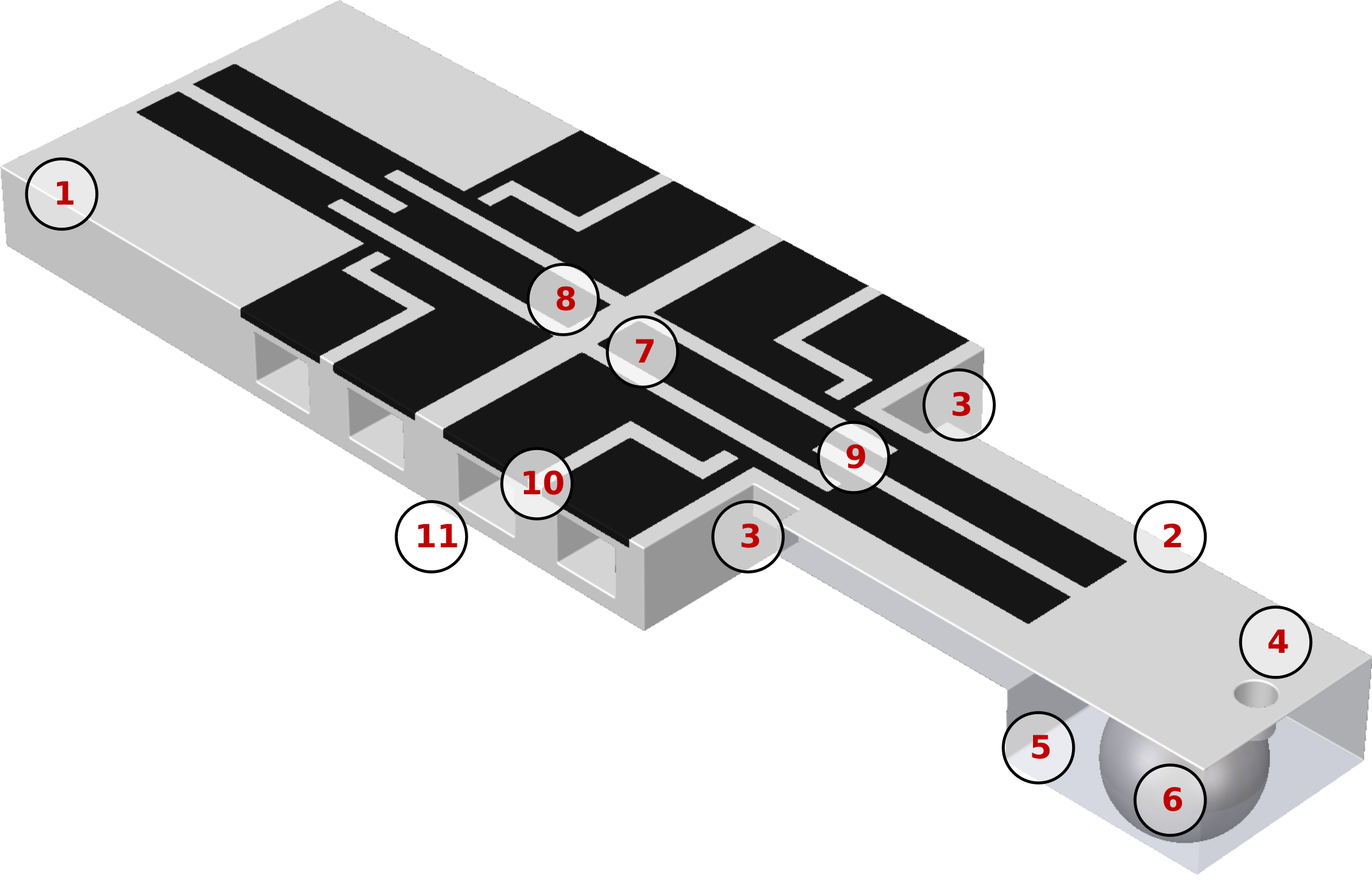
A relatively large cantilever base, which may be easily clamped in a vice for calibration.
Cantilever beam.
Notches in the base of the cantilever beam.
A hole in the free end of the cantilever beam from which to suspend known weights for the purpose of calibration.
A mount in a cutaway view to show the proof mass it holds.
The proof mass – a steel ball – half embedded in its mount.
Primary set of thin, contiguous conductive traces (black) embedded in the surface of the cantile-ver beam surfaces.
Secondary/reference set of conductive traces (black).
The sensing element (black) for the force sensor / accelerometer – a strain gauge.
The current-forcing and voltage-sensing terminals for four-terminal sensing, either type of which may also be used for ordinary two-terminal sensing. They have large electrical contact pads (black) for probe tips or crocodile clips.
Slots for crocodile clips.
Download this model:
A Pithon accelerometer configuration for calibrated use is illustrated below, where continued numbering corresponds to the design features thereafter that stand out from above.
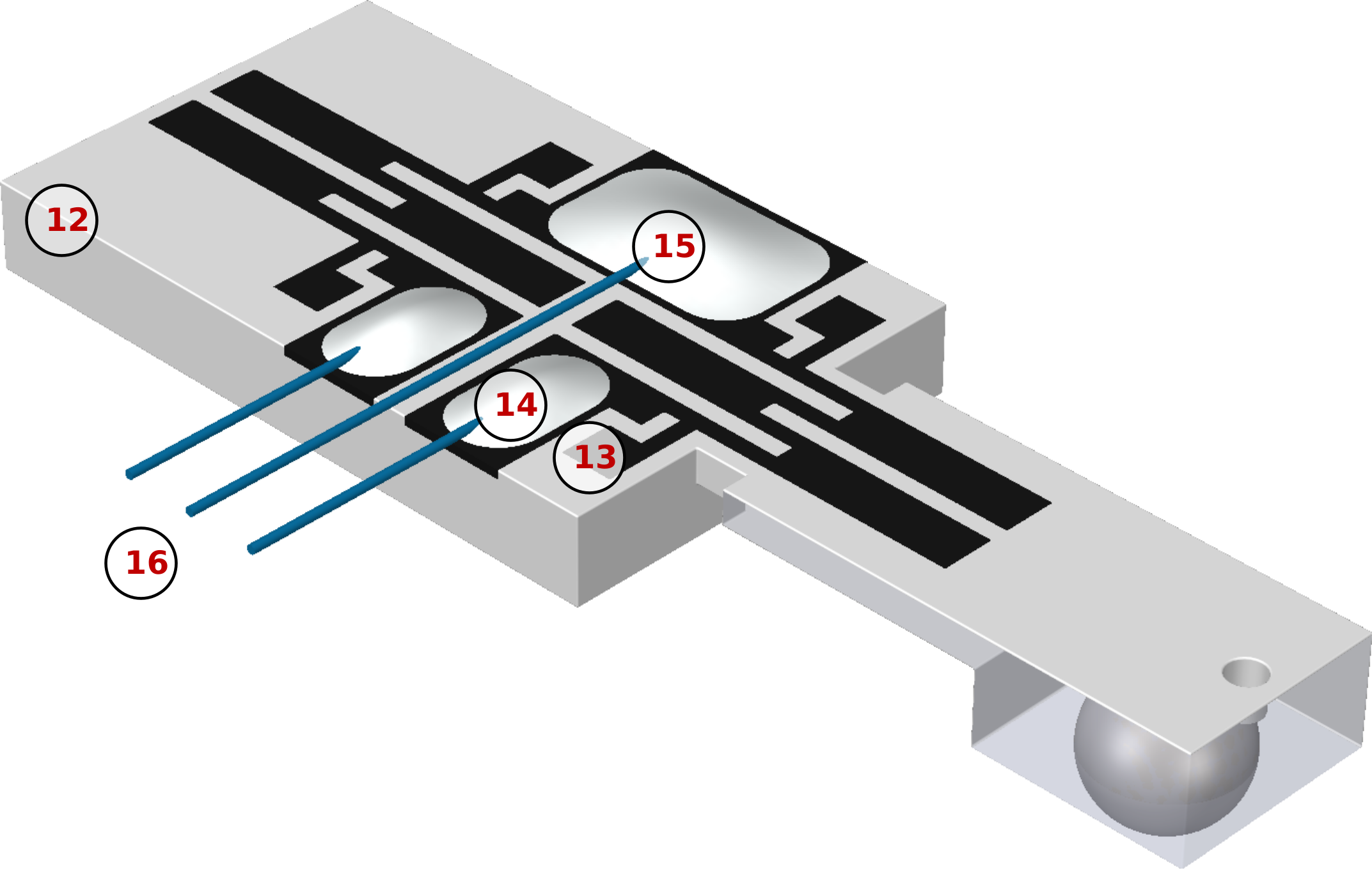
A more compact cantilever base for a shorter print time, reduced material consumption, and more convenient implementation within designs.
Voltage-sensing terminals for four-terminal sensing, which may also be used for two-terminal sensing. They have compact contact pads (black) made for probe tips.
Terminals for two-terminal sensing, which may also be used as current-forcing terminals for four-terminal sensing. They have large contact pads (black) for probe tips or applied conductive paint/epoxy (silver).
A shared terminal for two-terminal sensing, which may also be used as a shared current-forcing terminal for four-terminal sensing. It has a large contact pad (black) for probe tips or applied conductive paint/epoxy (silver).
Wire leads embedded in conductive paint/epoxy.
Download this model:
The accelerometer may also be calibrated as a force sensor without its proof mass or when stationary along its vertical axis (and not in the presence of a magnetic field on the metallic mass), or as a single-axis magnetic field sensor when moving freely and stationary along its vertical axis.